Safety Instructions for Rebar Cutters
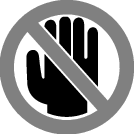
Keep your hands away from the cutting area and the rotating saw blade. You could seriously injure yourself.
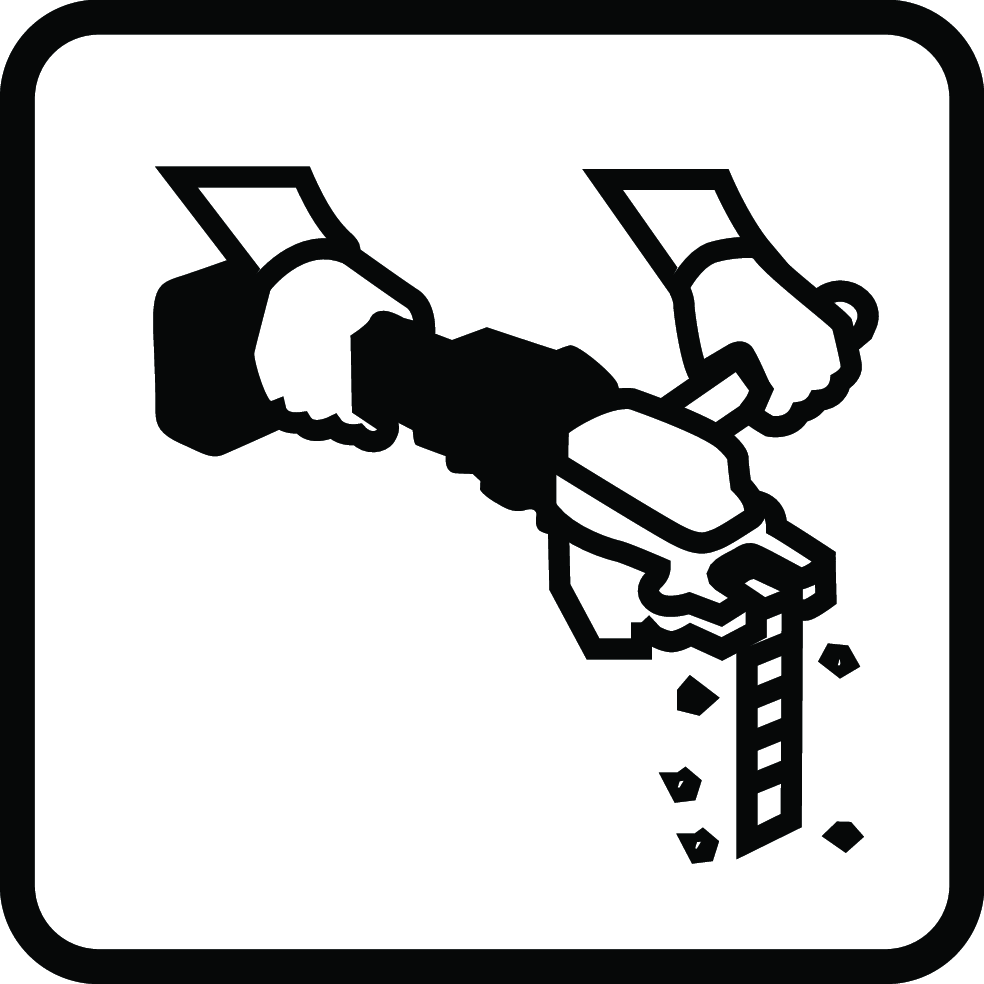
Always hold the product with both hands on the intended handles and never reach into the cutting area during operation. Keep the handles dry, clean, and free from oil and grease. This allows you to work effectively and safely.
- Never use the power tool without the base plate. You can only work properly and safely with the base plate mounted.
- Only use saw blades approved for the product that meet the specifications in the technical data. Using the saw blade for other applications may result in excessive wear, blade detachment, reduced cutting performance and excessive heat build-up, which may damage the saw blade and cause serious injury.
- Do not use a blunt or damaged saw blade. A saw blade with blunt or misaligned teeth causes increased friction, jamming of the saw blade and kickback due to a kerf that is too narrow.
- Use suitable detectors to determine if there are hidden supply lines or contact the local utility company for assistance. Contact with electric cables can cause fire and electric shock. Damaging gas lines can lead to explosion. Breaking water pipes causes property damage.
- Hold the power tool by insulated gripping surfaces only, when performing an operation where the cutting tool may contact hidden wiring. Contact with a "live" wire will also make exposed metal parts of the power tool "live" and could give the operator an electric shock.
- Only switch on the power tool once you have moved it into the working position and hold it firmly with both hands. This will help you avoid uncontrolled kickback.
- Hot and sharp metal chips can be produced during work and can cause cuts and burns upon skin contact.Wear close fitting clothing.
- Only start cutting once the power tool has reached its maximum speed. Touching the workpiece with the saw blade before starting the motor will overload and damage the saw blade and may result in serious injury.
- Do not restart the cutting operation in the workpiece if kickback occurs. Remove the power tool from the workpiece and let the saw blade reach full speed and carefully re-enter the cut. The saw blade may bind again or kickback if the power tool is restarted in the workpiece.
- If the saw blade gets stuck or jammed during cutting, it will block and kickback may occur. This may cause the power tool to move uncontrollably.
- Sparks and hot metal chips can be generated during work, potentially igniting flammable materials in the environment or damaging surfaces. Ensure that no flammable materials are present in the working area and protect sensitive surfaces.
- Avoid touching the head of the power tool during operation. It can become very hot and you could injure yourself.
- The saw blade and other metal parts may be hot or have sharp edges. Wear protective gloves when changing the saw blade.
- When working at height, ensure that no one is standing below. Falling chips or material residues can cause accidents.
- Never place the power tool down before the application tool has come to a complete stop. The rotating application tool can seriously injure your hand or touch the work surface and move uncontrollably.
- In case of damage and improper use of the battery, vapours may be emitted. The battery can set alight or explode. Ensure the area is well ventilated and seek medical attention should you experience any adverse effects. The vapours may irritate the respiratory system.
- Do not modify or open the battery. There is a risk of short-circuiting.
- The battery can be damaged by pointed objects such as nails or screwdrivers or by force applied externally. An internal short circuit may occur, causing the battery to burn, smoke, explode or overheat.
- Only use the battery in the manufacturer's products. This is the only way in which you can protect the battery against dangerous overload.
Protect the rechargeable battery against heat, e.g. including prolonged sun exposure, fire, water, and moisture. There is a risk of explosion and short circuit.